 How-to
How to Remove Coffee Stains from Tumblers Fast
Table of Contents
- Why Coffee Stains Build Up in Tumblers
- What You'll Need Before You Start
- Method 1: Baking Soda Paste for Light to Moderate Stains
- Method 2: White Vinegar Soak for Set-In Stains
- How to Clean Tumbler Lids and Straws Without Missing a Spot
- How to Remove Tea Stains from Cups and Tumblers
- Preventing Coffee Stains and Keeping Your Tumbler Clean Long-Term
- Your Next Step: Keep a Clean Tumbler Routine Going
- Frequently Asked Questions
Why Coffee Stains Build Up in Tumblers
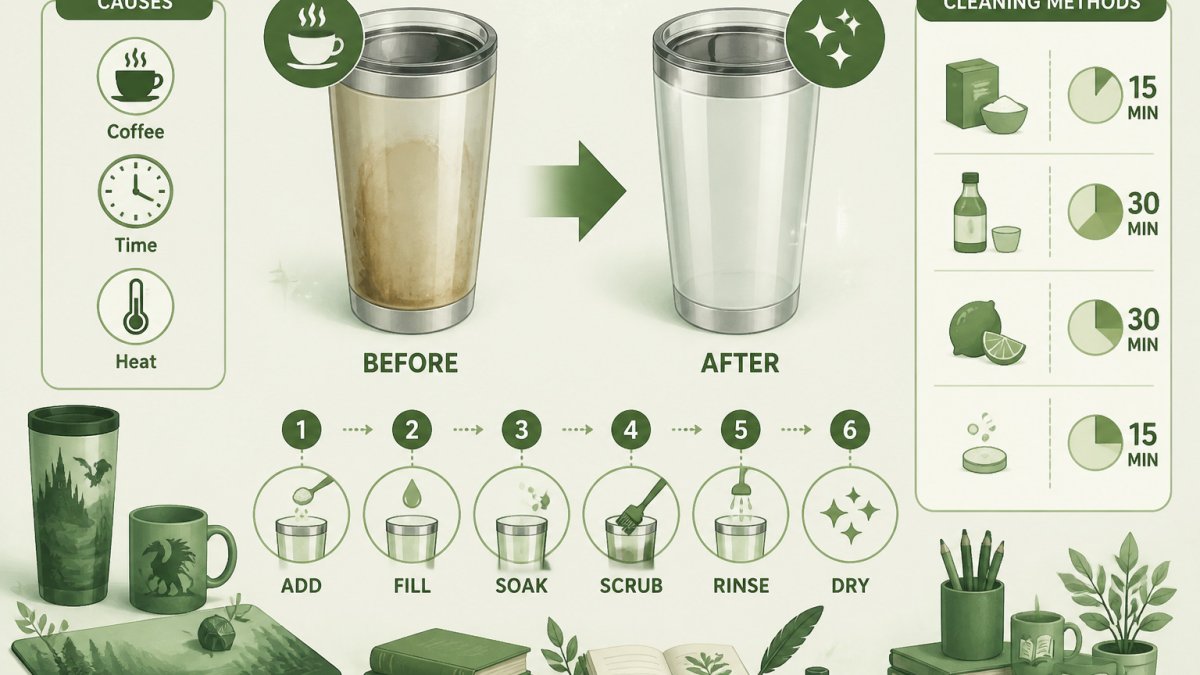
Coffee stains form when tannins and oils from your brew cling to the inside walls of your tumbler, which is why learning how to remove coffee stains from tumblers early pays off. Even durable steel and plastic can hold onto dark residue over time. The good news is that most stains come out with simple household ingredients.
Stains usually build up in a few predictable places:
- The base and bottom curve, where liquid sits longest
- The lid seal and gasket, where old coffee dries and hides
- Straw interiors, which are easy to forget
- Rims and sipping edges, where oils collect
Dark roasts, cream, and sugar all leave more residue than black coffee. Tea leaves and tannins can also leave a yellow or brown tint that looks stubborn.
What You'll Need Before You Start
Gather these basic supplies before you begin. Most are already in your kitchen.
- Baking soda
- White vinegar
- Warm water
- A soft sponge or bottle brush
- A straw brush for narrow openings
- A clean, dry towel
Check your tumbler's care label first. Some printed or coated finishes need gentle handling. Avoid harsh scouring pads on printed surfaces, since they can scratch the design. If a cleaning mishap damages your tumbler, you can review our store policies on damaged merchandise. If you have questions about printed drinkware, the Drinkware collection shows the materials and finishes used across our products.
Method 1: Baking Soda Paste for Light to Moderate Stains
Baking soda works well on everyday coffee film. It is gentle enough for most finishes and cheap to use.
- Mix 2 tablespoons of baking soda with a few drops of warm water to form a paste.
- Spread the paste inside the tumbler, focusing on the base and walls.
- Scrub gently with a soft sponge or bottle brush for about 1 minute.
- Let the paste sit for 10 to 15 minutes.
- Rinse thoroughly with warm water until no grit remains.
Watch out: Do not scrub printed exteriors with baking soda paste. Keep it to the interior unless your care label says otherwise.
Method 2: White Vinegar Soak for Set-In Stains
For tough, set-in stains, a vinegar soak loosens residue that scrubbing alone may miss. A vinegar soak can loosen tannin and oil film before you scrub.
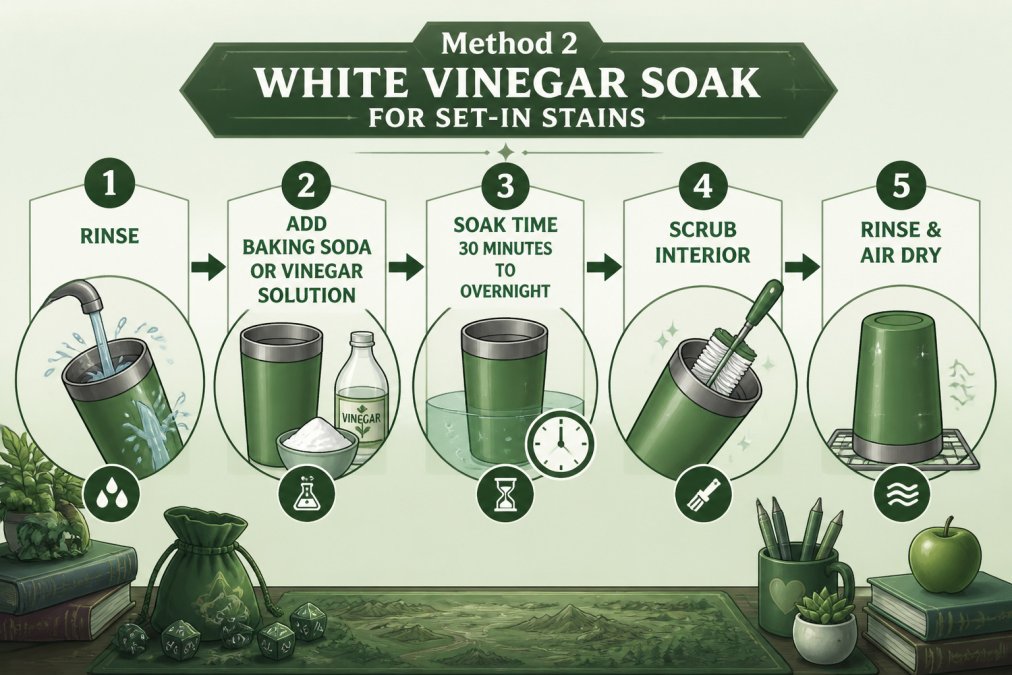
Precise ratio and timing: Mix 1 part white vinegar with 2 parts warm water (for example, 1/2 cup vinegar to 1 cup water for a standard 20-ounce tumbler). Use warm, not boiling, water, boiling water can warp some plastic lids and gaskets and is unnecessary for stain removal. Soak for 30 minutes for moderate buildup. For heavy or months-old staining, soak up to 4 hours or overnight, but no longer than 12 hours to avoid prolonged acid exposure on seals.
- Fill the tumbler with the 1:2 vinegar-to-water solution, leaving room at the top.
- Let it soak for 30 minutes (or up to overnight for heavy stains).
- Scrub the interior with a soft bottle brush, paying attention to the base curve.
- Rinse thoroughly with clean warm water until the vinegar smell is gone.
- Air dry upside down on a towel.
Material safety: Vinegar is safe for uncoated stainless steel and ceramic. On plastic tumblers, limit soaks to 30 minutes and rinse well, since prolonged acid exposure can dull some plastics. Avoid vinegar on painted or printed exteriors and on vacuum-insulated tumblers with exposed seams, check the care label first. Do not use vinegar on aluminum, which can discolor.
If the stain persists after one soak, repeat the soak once more before trying a different method.
Here is a quick comparison of the two stain-removal methods covered above, so you can pick the right one for your tumbler.
| Method | Best for | Soak time |
|---|---|---|
| Baking soda paste | Light to moderate everyday film | 10 to 15 minutes |
| White vinegar soak | Set-in stains | 30 minutes, up to 12 hours |
How to Clean Tumbler Lids and Straws Without Missing a Spot
Lids and straws hide much of the buildup, and they are the most common source of lingering odor and off-taste. Coffee residue trapped in the gasket groove and straw interior can cause lingering odors, so cleaning these parts too is important. Clean these parts separately every time.
Step-by-step:
- Disassemble all removable parts: lid, gasket (the rubber seal), slider or flip cap, and straw. Most gaskets pull out with a fingernail or the handle of a small spoon.
- Soak the lid and straw in warm, soapy water for 10 minutes. For odor, add 1 tablespoon of baking soda to the soak water.
- Use a straw brush to scrub the inside of the straw, then rinse from both ends.
- Wipe the gasket with a damp cloth and inspect the groove for dark residue. If residue remains, scrub the gasket gently with a soft brush and a baking soda paste, then rinse.
- Air dry every piece completely before reassembling. Stand the lid upside down and leave the gasket off until both are dry.
Material and safety notes: Do not stretch gaskets during cleaning, since stretching can break the seal. For plastic straws, avoid boiling water, which can warp them; use warm water only. For metal straws, a straw brush and warm soapy water are sufficient, and you can sanitize with a 1:2 vinegar-to-water soak for 10 minutes.
How to Remove Tea Stains from Cups and Tumblers
Tea stains look yellow or brown and often need a little more time. The same baking soda or vinegar methods work well here.
- For light tea film, use the baking soda paste for 10 minutes.
- For heavier staining, soak in vinegar and water for 30 minutes.
- For stubborn marks, repeat the soak once more before scrubbing.
Rinse thoroughly after each step. Leftover residue can make the next cup taste off.
Preventing Coffee Stains and Keeping Your Tumbler Clean Long-Term
Regular habits prevent most stain problems before they start. For more ongoing care tips, see How to Care for Printed Drinkware. Try these simple routines:
- Rinse your tumbler right after each use.
- Wash it with warm, soapy water at least once a day.
- Do a deeper clean with baking soda or vinegar once a week.
- Dry every part completely before storing.
Check the manufacturer's care instructions before using a dishwasher, since heat and harsh detergents can fade designs. If you want a tumbler that is easier to keep clean, shop our drinkware for your next pick.
Your Next Step: Keep a Clean Tumbler Routine Going
Coffee stains are easy to handle once you know where they hide and which method fits the job. Start with baking soda for everyday film, move to a vinegar soak for set-in marks, and clean your lids and straws every time. A small routine keeps your favorite tumbler looking and tasting fresh for much longer.
Frequently Asked Questions
Does hydrogen peroxide remove coffee stains from tumblers?
Hydrogen peroxide is one cleaning option some people use for coffee stains on tumblers when mixed with baking soda into a paste or used as a short soak. Combine equal parts 3% hydrogen peroxide and warm water, let the tumbler sit for 15 to 30 minutes, then scrub with a soft brush and rinse thoroughly. Avoid mixing hydrogen peroxide with vinegar in the same container, because the combination can form peracetic acid, which irritates skin and lungs. Rinse completely before the next use.
Can baking soda remove coffee stains from stainless steel?
Baking soda is a mild abrasive commonly used for light cleaning, and it can be used gently on stainless steel. Make a paste with a few teaspoons of baking soda and a small amount of water, apply it to the stained interior, let it sit for 10 to 15 minutes, then scrub with a non-abrasive sponge or soft brush. Rinse well and dry. For heavier discoloration, follow with a vinegar soak.
Can you put a stained tumbler in the dishwasher?
Dishwasher suitability depends on the specific tumbler, so check the manufacturer's care instructions first, since some insulated tumblers and lids with rubber gaskets may be hand-wash only. Dishwasher detergent alone often does not remove set-in coffee or tea stains, so pre-soak the tumbler with baking soda or vinegar before running it. Remove any silicone or rubber parts and wash them separately.
How do you clean tea stains from a Yeti tumbler?
Fill the tumbler with warm water and add a tablespoon of baking soda or a half cup of white vinegar, then let it soak for 30 minutes to a few hours depending on how old the stain is. Scrub the interior with a bottle brush, paying attention to the rim and base where residue collects. Clean the lid and straw separately, then rinse thoroughly. Confirm that your tumbler's care guidance allows these cleaning agents before using them.