 How-to
How to Keep Printed Cup Colors Vibrant for Years
Last Updated: November 10, 2026
Quick Summary
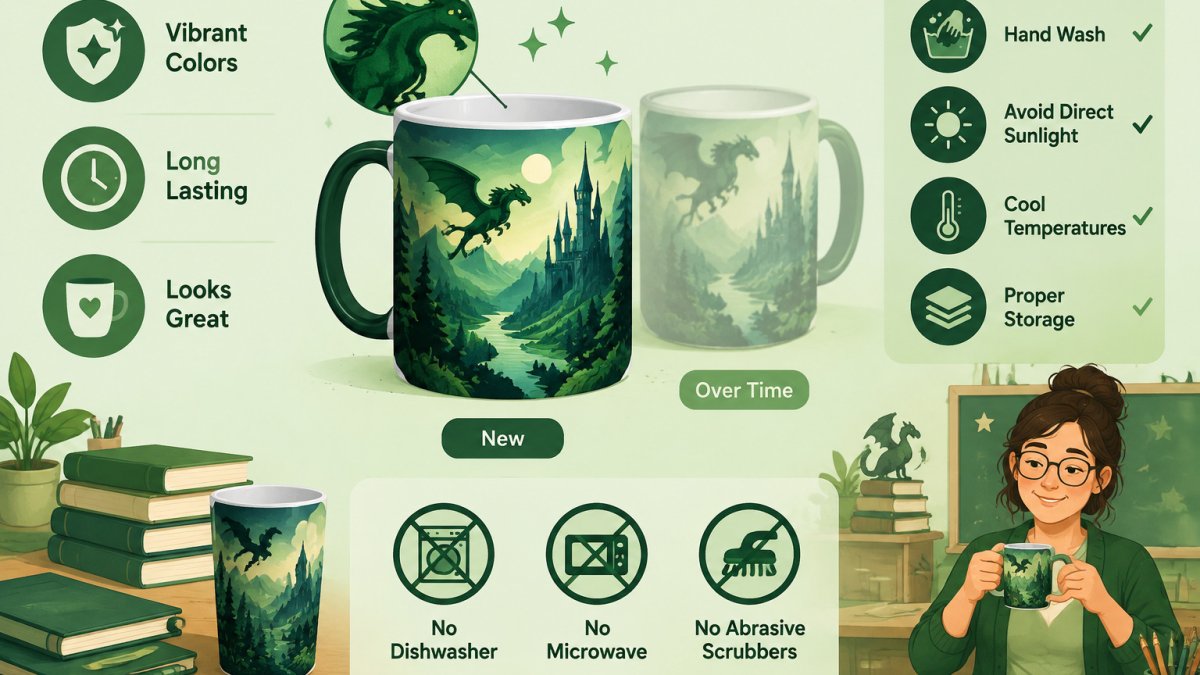
Printed cups keep their color for years when you hand wash them in warm water with mild soap, avoid the dishwasher's heat and harsh detergent, and store them out of direct sunlight. Most fading comes from heat, friction, and harsh cleaning rather than the print itself.
- Wait several hours after pressing before touching a new cup with wet hands.
- Skip the dishwasher for the first three days, then use gentle cycles on the top rack.
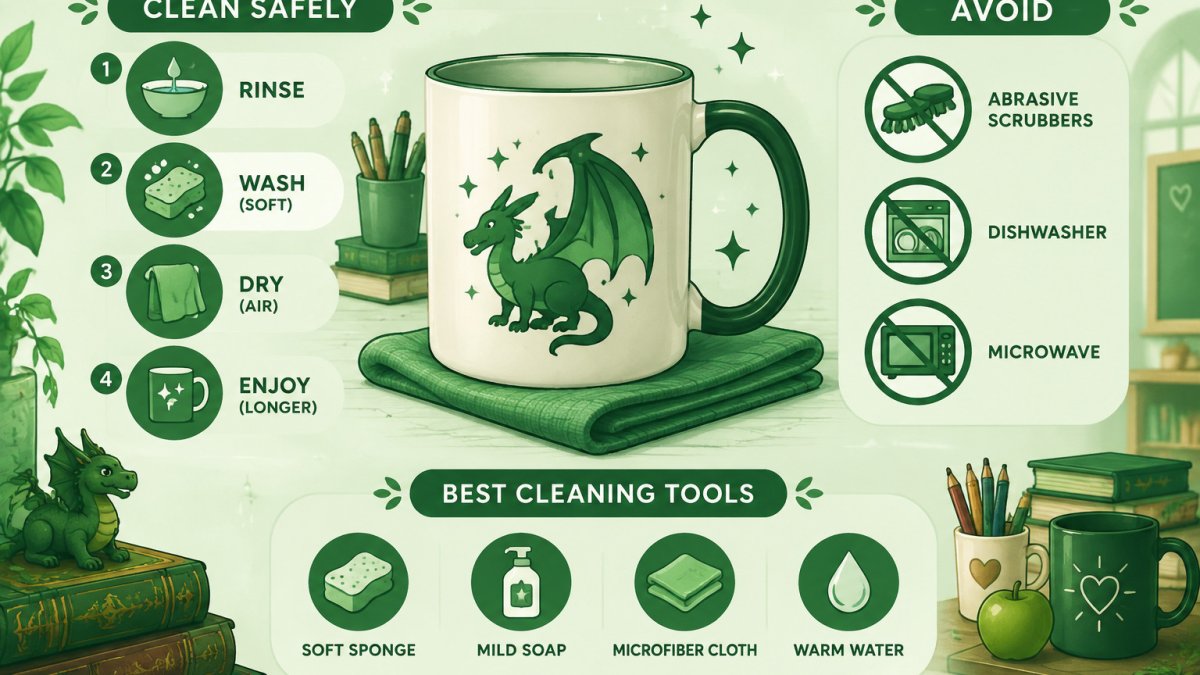
- Wash with warm water, mild dish soap, and a soft sponge instead of scouring pads.
- Store cups in a closed cabinet, not on a sunny windowsill or in a hot car.
- Put a soft barrier between stacked cups to prevent friction and scuffing.
Table of Contents
- Why Printed Cup Colors Fade and Dull Over Time
- Sublimation Mug Care Instructions for the First 72 Hours
- How to Hand Wash Custom Mugs Without Losing Color
- Preventing Dishwasher Damage to Printed Cups
- Storage, Sunlight and Environmental Factors That Degrade Color
- Material-Specific Care for Ceramic, Glass and Tumblers
- Your Next Step: Set Up a Care Routine for Your Printed Drinkware
- Frequently Asked Questions
Why Printed Cup Colors Fade and Dull Over Time
Printed cups can keep their color for years when you care for them the right way. Sublimation is a process that turns dye into gas and bonds it into the coating. Most fading comes from heat, friction, and harsh cleaning, not from the print itself.
Fading usually shows up slowly. The colors look a little flat after a few months, and the edges of the design soften. Knowing the common causes helps you stop them before they start.
- Repeated exposure to very hot water
- Abrasive scrubbing pads and harsh detergents
- Long periods in direct sunlight
- Dishwasher cycles with strong heat and chemicals
- Stacking cups without protection
How sublimation ink bonds to the coating
Sublimation ink does not sit on top of the cup like paint. The heat press turns the ink into a gas, and that gas soaks into the polymer coating. When the cup cools, the ink is locked inside the surface.
This is why sublimated designs resist peeling. It also means the color lives in the coating, so only a rough or chemical attack can wear it down.
Sublimation Mug Care Instructions for the First 72 Hours
The first three days matter most. The coating is still settling, and the print is still fully bonding with the surface.
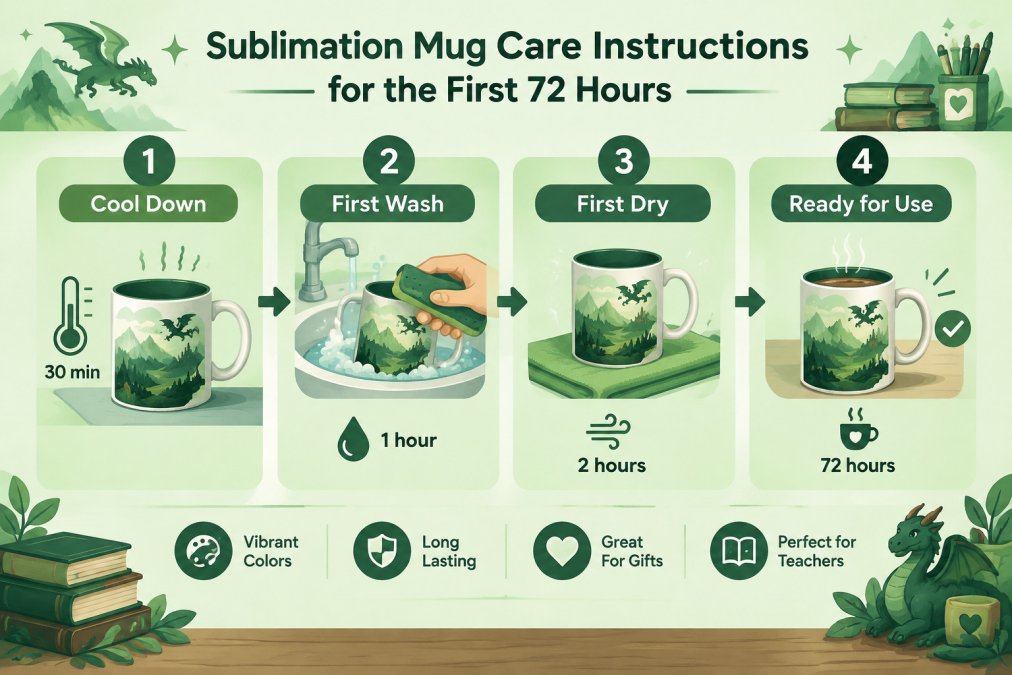
Here are general care steps for the first 72 hours:
- Let the cup cool completely. Wait several hours after pressing before you touch it with wet hands.
- Avoid the dishwasher. Do not run the cup through a dishwasher for the first three days.
- Use warm water only. When you first wash it, use warm water and a soft cloth.
- Air dry. Let the cup dry on a rack instead of rubbing it with a towel.
- Hold off on hot liquids. Filling the cup with very hot drinks right away can stress the print.
The first three days are the most important, so here is a quick summary of the early care steps.
| Step | What to do | Time |
|---|---|---|
| Let it cool | Wait several hours after pressing before touching with wet hands | Several hours |
| Skip the dishwasher | Do not run it through a dishwasher | First 3 days |
| Wash gently | Use warm water and a soft cloth | First 3 days |
| Air dry | Let it dry on a rack, not with a towel | Every wash |
| Hold hot liquids | Avoid very hot drinks right away | First 3 days |
How to Hand Wash Custom Mugs Without Losing Color
Hand washing is the gentlest way to clean a printed cup. It also takes less than a minute.
A simple hand-washing routine looks like this:
- Rinse the cup in warm water right after use.
- Add a few drops of mild dish soap to a soft sponge.
- Wipe the inside and outside gently in circles.
- Rinse well to remove soap residue.
- Dry with a soft, lint-free cloth or let it air dry.
Avoid steel wool, scouring powder, and bleach, which can remove color. For stubborn stains, soak the cup in warm soapy water for ten minutes, then wipe gently.
Preventing Dishwasher Damage to Printed Cups
Dishwasher cycles with high heat, strong detergent, and rough jostling can wear down printed surfaces over time.
If you use a dishwasher, these general habits may help:
- Choose the gentlest cycle, often labeled eco or light.
- Use a mild detergent instead of a heavy-duty one.
- Place cups on the top rack, away from the heating element.
- Keep cups from knocking against other dishes.
- Turn off the heated dry option and let them air dry.
Storage, Sunlight and Environmental Factors That Degrade Color
How you store a printed cup affects how well its color holds up over time. Different environmental exposures can affect printed surfaces in different ways.
Ultraviolet light
UV light is generally known to affect dyed surfaces over time. Keeping printed cups in a closed cabinet rather than in direct sun is a general storage precaution.
Practical countermeasures:
- Store printed cups in a closed cabinet or drawer rather than on an open shelf facing a window.
- If you display a cup, choose a spot with indirect light and rotate displayed pieces every few weeks so no single cup takes the full dose.
- Treat a car interior as a UV oven. A cup left on a dashboard in summer can receive more UV in one afternoon than it would in a month indoors.
Heat cycling
Repeated exposure to very hot water and heat can stress printed coatings over time, so gentler handling is a general precaution.
Avoid microwaving printed cups unless the manufacturer's care label allows it.
Humidity and moisture
Moisture can affect printed surfaces in a few ways. First, it helps airborne dust and oils cling to the surface, and those contaminants can abrade the coating during handling. Second, in humid storage, condensation can form between stacked cups and trap residue against the print. Store cups dry, avoid stacking them directly against each other without a soft barrier, and let a washed cup air-dry completely before putting it away.
Water hardness and detergent chemistry
If you wash printed cups by hand, the water itself matters. Hard water leaves mineral deposits (calcium and magnesium) that film the surface and make colors look hazy. A soft cloth and a mild dish soap remove most of it, but a diluted white-vinegar rinse followed by a clean-water rinse will strip mineral film that soap alone leaves behind. On the detergent side, avoid anything labeled heavy-duty, oxygen-bleach, or citrus-based; those formulations are designed to attack organic films and can gradually dull the polymer surface. Mild, dye-free dish soap is the safest default.
Stacking and friction
Friction between cups can scuff printed surfaces over time. When you store cups together, put a soft cloth, a paper napkin, or a felt pad between them, and never slide a stack of cups across a shelf.
A simple storage checklist
- Closed cabinet, indirect light, no sunny windowsill.
- Fully dry before storage.
- Soft barrier between stacked cups.
- No long-term storage in a hot car or garage.
- Rotate display pieces so no single cup absorbs all the UV.
Material-Specific Care for Ceramic, Glass and Tumblers
Different cup materials respond differently to heat and cleaning, so care methods can vary by substrate. The guidance below separates the major substrate types you are likely to own.
Ceramic mugs
Ceramic is the most forgiving substrate for a sublimated print because the glaze and polymer coating bond tightly and the material distributes heat evenly. That even heat distribution is also the risk: a ceramic mug filled with boiling water heats the whole wall quickly, and the coating expands with it. Repeated thermal shock is what eventually clouds the glaze.
- Hand wash in warm water with mild soap as the default.
- If you use a dishwasher, choose a gentle or eco cycle, top rack only, and turn off heated dry.
- Let the mug cool before washing after a hot drink; do not plunge a hot mug into cold water.
- Dry promptly with a soft cloth to prevent hard-water spotting.
Watch out: ceramic mugs with metallic rims or decals should never go in a microwave, and the microwave is hard on the sublimated print as well.
Glass cups
Glass can crack from sudden temperature change, so avoid pouring boiling liquid into a cold glass cup. Glass also tends to show water spots and fingerprints.
- Never pour boiling liquid into a cold glass cup; let the glass warm to room temperature first.
- Hand wash in warm, not hot, water.
- Dry immediately with a lint-free cloth to avoid spotting.
- Store glass cups upright and separated; do not stack them rim-to-base without a barrier.
- Keep glass out of the freezer and out of the dishwasher's heated dry cycle.
Stainless steel tumblers and polymer-coated metal
Metal tumblers are often finished with a coating that can be sensitive to abrasion. Abrasion is the main enemy: abrasive pads, scouring powders, and gritty sponges scratch the coating and leave a hazy, less saturated surface. Metal also conducts heat fast, so a tumbler left in a hot car reaches higher surface temperatures than a ceramic mug would.
- Hand wash with mild soap and a soft sponge; avoid abrasive pads entirely.
- Do not soak for long periods, especially in detergent-heavy water.
- Avoid the dishwasher unless the manufacturer explicitly rates the tumbler as dishwasher-safe; even then, top rack and no heated dry.
- Keep tumblers out of hot cars and away from direct sun when not in use.
- Check the base and lid threads for residue buildup, which can trap moisture against the coating.
Paper cups
A paper cup that gets wet on the outside will wick water into the paper and can lift or mottle the print.
- Keep paper cups dry; store them in a closed cabinet away from humidity.
- Do not refrigerate or freeze printed paper cups, since condensation will damage the print.
- Use them for cold or room-temperature drinks unless the cup is explicitly rated for hot liquids.
- Handle by the base rather than squeezing the walls, which can crack the print.
A quick decision rule
If you are unsure how to treat a printed cup, work from the substrate inward: glass and paper are the most fragile, ceramic is the most forgiving, and coated metal sits in between with abrasion as its main risk. When in doubt, hand wash in warm water with mild soap, dry promptly, and store away from light and heat. The manufacturer's care label always overrides general guidance, because coating formulations vary between products.
Your Next Step: Set Up a Care Routine for Your Printed Drinkware
A simple routine can help keep colors looking good over time. Start with gentle hand washing, keep cups out of harsh dishwasher cycles, and store them away from direct sunlight. Many people find that a weekly quick check, looking for dullness or residue, catches problems early.
If you are ready to refresh your collection or find new designs, browse the Mythikal Sundries LLC drinkware collection to explore available drinkware.
Frequently Asked Questions
Why do my printer colors look dull on printed cups?
Dull output usually traces back to a few causes: a clogged or misaligned print head, a color profile that does not match your printer and substrate, too little ink saturation, or a heat press that is not hitting the right temperature and dwell time. Run a nozzle check first, then confirm you are using the ICC profile supplied for your coating. Adjust one variable at a time and print a small test swatch so you can see which change made the difference.
Are dishwasher-safe printed cups actually permanent?
Dishwasher-safe is not the same as permanent. Repeated high-heat cycles, harsh detergents and abrasive scrubbing can wear printed surfaces over time. Hand washing with a soft sponge and mild soap, and avoiding the top rack's heating element, extends the life of the print considerably.
How do I keep my custom printed mugs from fading?
Keep cups out of direct sunlight for long periods, since UV exposure can affect printed surfaces over time. Store them upright with space between cups rather than stacked against each other, which can scratch the surface. Avoid microwaving unless the manufacturer specifically allows it, and let the cup cool before washing so thermal shock does not stress the coating.
Can I seal a printed design on a mug to protect it?
Some crafters apply a post-print clear sealant to add a layer of protection, but sealants must be compatible with the coating and should be food-safe if the cup will hold drinks. Test any sealant on a spare cup first and allow full curing time before use. Many printed mugs do not need an extra sealant when the original press was done at the correct temperature and time.